
The Door That Won't Budge
You hit the remote on your way out and the door creeps up an inch, groans, and stalls. Or it opens fine but closes like it's dragging through wet sand, the opener straining and clicking before it finally seats. Sometimes the bottom edge seems almost glued to the slab, like it needs a tug to break free before it'll lift at all. In colder climates people blame ice. Here, the culprit is usually the same moisture that defines a North Port garage — just showing up in a different way as the nights cool off and the humidity swings harder between morning and afternoon.
What You'll Notice
- The door hesitates at the very bottom before it starts moving, like it's peeling away from the floor.
- The opener motor sounds like it's working harder than usual, with more grinding or straining noise.
- The door moves unevenly, one side lagging the other, or it shudders on the tracks instead of gliding.
- It reverses on its own partway through closing, as if something is resisting it.
- Everything feels fine by afternoon, only to act up again the next cool, damp morning.
None of this means your door is frozen in the literal sense. It means something mechanical is fighting the door's movement, and a technician works through the likely causes in a specific order because each one rules out or points to the next.
1. Check the Manual Lock First
Before anything else, a tech checks whether the manual release or an interior slide lock got bumped or engaged by accident — especially common if a storm shutter routine or hurricane-season prep left the emergency cord pulled. If this is the problem, the fix is simply resetting the lock arm and testing the cycle. Quick, free, and worth ruling out first.
2. The Bottom Seal Sticking to the Slab
This is the one that genuinely feels like the door is "frozen" in place. North Port's humidity and afternoon downpours keep concrete slabs damp more often than not, and that moisture promotes a thin layer of mildew or algae film where the rubber weather seal meets the floor. Over time the seal can tack itself to the slab, especially overnight when temperatures and humidity both drop. The fix involves cleaning the slab edge, inspecting the seal for swelling or cracking, and replacing it if it's lost its shape — a worn seal won't reseat cleanly even after the sticking is resolved.
3. Tracks and Rollers
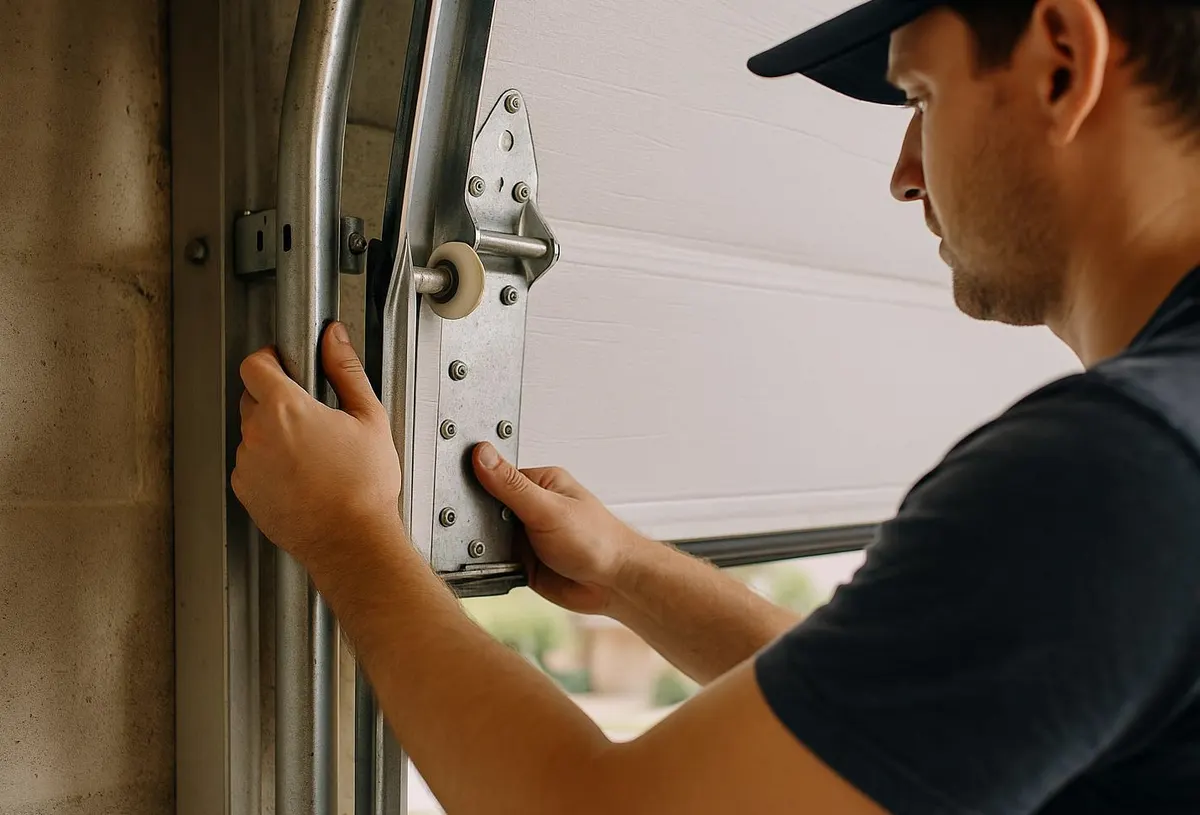
Next, a technician runs a hand along the tracks checking for rust pitting, especially on doors closer to the coast where salt air accelerates corrosion on galvanized rails and roller stems. Debris from storm season, swollen wood trim that's crept inward, or a track knocked slightly out of alignment will all create drag. The fix is cleaning and realigning the tracks, replacing rollers that have rusted or flat-spotted, and confirming the gap is even top to bottom on both sides.
4. Lubrication Breakdown
Humidity doesn't just rust metal — it washes out lubricant faster than drier climates do, leaving hinges, rollers, and the torsion spring coils dry or gummed up with grit. A dry or sludgy spring coil adds noticeable resistance right when the door needs the most help lifting its own weight. The fix is a full relube with a garage-door-specific lubricant (not household oil, which attracts dust and breaks down quickly in heat), applied to hinges, rollers, and springs.
5. Spring Tension
If the door still feels heavy or the opener strains even after the seal and tracks check out, the springs themselves may be the issue. Torsion springs lose tension gradually over thousands of cycles, and that wear becomes more obvious in cooler weather when the metal contracts slightly and lubricant thickens, amplifying any existing weakness. This is also where age matters most: a spring near the end of its cycle life that's been through a few hurricane seasons of humidity swings is more likely to fail here than fade gracefully. Spring tension adjustment or full replacement is not a DIY repair — these springs are under extreme load and require proper tools and training.
6. Opener Motor and Limit Settings
Last in line is the opener itself. If the door is moving freely by hand but the motor still struggles, the gear set may be worn, the limit settings may have drifted, or the motor may simply be aging out. This is diagnosed by testing manual versus motorized operation separately, then servicing or replacing the opener as needed.
When to Call North Port Garage Door
If your door is sticking at the bottom, groaning through its cycle, or the opener sounds like it's working too hard, it's worth having it looked at before a spring fails under load or the opener burns out trying to compensate. North Port Garage Door handles everything from Spring Replacement to Garage Door Opener Repair, and our Preventive Maintenance service catches seal wear, track corrosion, and lubrication issues before they turn into a door that won't open at all.
If your garage door in North Port, FL is sticking, straining, or just not moving the way it used to, call North Port Garage Door for a straightforward inspection and a fix that lasts through the next humidity swing.