
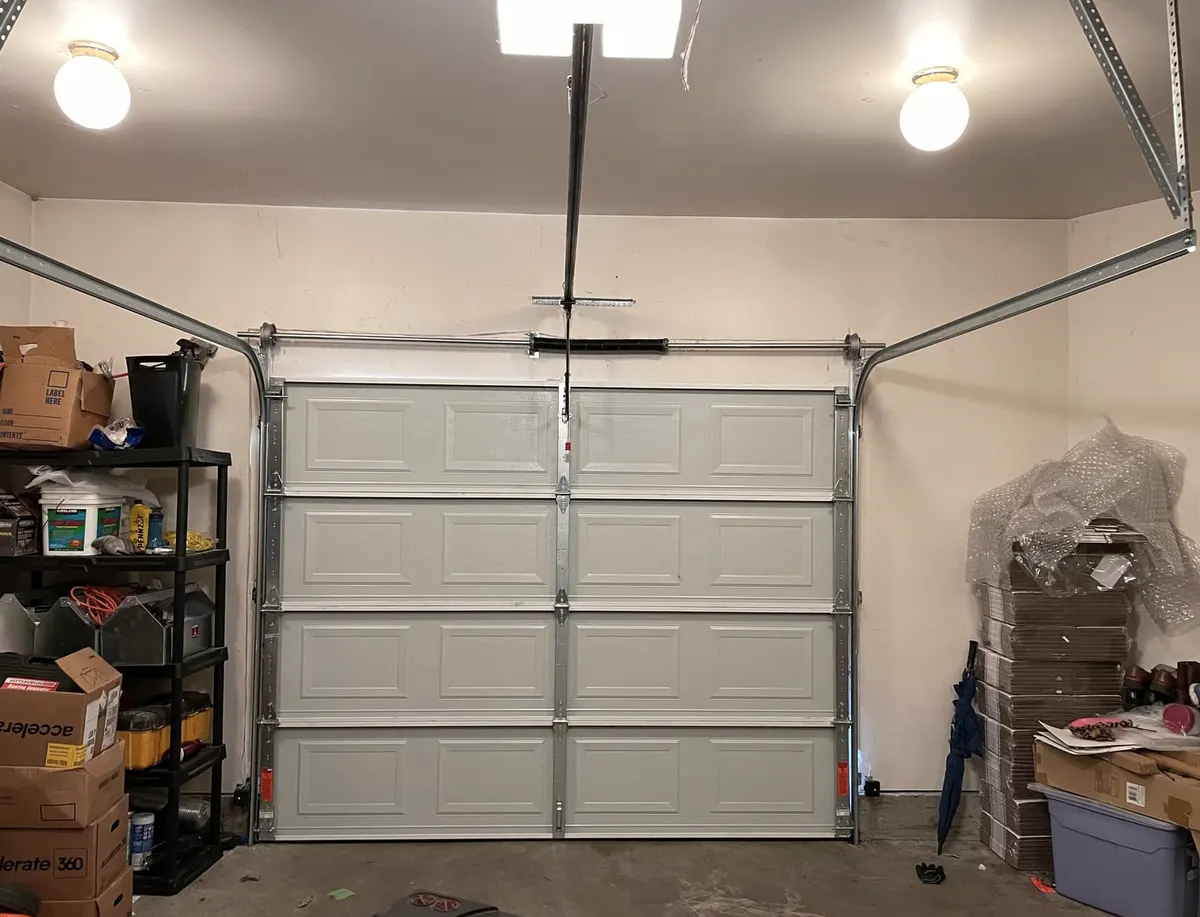
Short answer: the door still works for a living, even if the garage doesn't look like one anymore
No, you can't just leave it closed forever and forget it exists. A garage door that's rarely opened still has springs under tension, an opener motor that can seize from disuse, and weatherstripping that dries out or swells with humidity whether or not a car ever parks behind it. Converting the space to a gym, office, or workshop changes how the door gets used, not whether it needs upkeep.
What actually changes when the garage becomes a room
The door itself doesn't know the difference between "garage" and "home gym." What changes is the environment on the other side of it, and that environment puts new strain on parts that were engineered around a very different set of assumptions.
- Humidity goes up, not down. A sealed, air-conditioned gym or office traps moisture from workouts, cooking, or just daily living. With Florida's humidity already pushing into the garage, that trapped moisture condenses on cool metal — tracks, springs, hinges — and speeds up rust, especially near the coast where salt air is already working against you.
- Insulation adds weight. If you insulated the door itself to make the new room comfortable, you added pounds. Springs are matched to the door's original weight. An under-tensioned spring on a heavier door wears out faster and can snap without warning — not a safety risk you want next to a treadmill or a desk.
- The door gets opened less, which is its own problem. Infrequent use means lubricant dries out, rollers sit in one position long enough to flat-spot, and small misalignments go unnoticed until the door suddenly won't open at all.
- Vibration from gym equipment or shop tools. Repeated vibration from weight drops, power tools, or machinery can loosen bolts on brackets and openers over time — fine print nobody reads until something rattles loose.
The trade-off nobody mentions: sealing it up vs. keeping it storm-ready
Here's where the argument usually starts. One spouse wants the door sealed tight for climate control — foam gaskets everywhere, weatherstripping doubled up, maybe even permanently latched. The other remembers that this is still a garage door opening, built to meet wind-load requirements for hurricane season, and that over-sealing or modifying it can interfere with how it's designed to flex and resist pressure during a storm.
You can have both, but it takes a deliberate choice, not a DIY shortcut. Good weatherstripping keeps moisture and pests out without compromising the door's structural integrity. The issue is when gaps get filled with spray foam, rigid insulation gets glued directly to panels, or extra framing gets added without checking that the door can still open fully and seat correctly. Wind-rated doors depend on their hardware and panel structure working the way they were tested — alterations that aren't reversible can quietly undo that.
Signs the conversion is already stressing the door
- The door feels heavier to lift manually, or the opener strains and makes a new grinding or humming sound
- Visible rust starting on the tracks, springs, or bottom hardware, especially after a humid stretch or a storm
- The door doesn't sit flush at the bottom anymore, or daylight shows at the corners
- Opener sensors misfire more often, or the door reverses without an obvious obstruction
- A musty smell near the door even with the new room's AC running
Any one of these on its own might be minor. Two or three together usually means the balance between door, spring, and opener is off — and that's worth catching before a cable snaps or a panel warps.
When to call North Port Garage Door
If the door feels off-balance, sounds different than it used to, or you're not sure whether the springs were ever matched to the new weight after insulating, that's worth a proper check rather than a guess. Our preventive maintenance visits cover exactly this: spring tension, track alignment, hardware torque, and weatherstripping condition, all checked against how the door is actually being used now — not just how it was used when it was a garage. If a spring has already gone out of balance or snapped, our spring replacement service gets it matched correctly to the door's current weight, insulation included, so the opener isn't doing more work than it should.
If you're in North Port, Port Charlotte, Venice, Englewood, Sarasota, Nokomis, Osprey, or Punta Gorda and the garage-turned-gym argument needs a referee, give North Port Garage Door a call. We'll tell you straight whether the door's fine as-is or whether the conversion changed something that needs fixing before storm season tests it for you.